How does BestPair compare with Afiniti?
Same idea, different customer. Both send each contact to the person most likely to get a good outcome with it, learned from history, rather than to whoever is next. Afiniti made the category, mostly on inbound calls, for global enterprise contact centres running thousands of seats. BestPair works only on outbound floors, from 25 collectors up, runs off-site with nothing installed, and measures every month against a random split of accounts.
New to BestPair? See what it is and how it works
Side by side
| Afiniti | BestPair | |
|---|---|---|
| Who it is built for | Global enterprises: telecom, insurance and banking contact centres with thousands of seats | US and Canadian collection agencies, debt buyers and servicers with 25 or more collectors |
| Typical calls | Mostly inbound | Outbound only: accounts on agent lists or through the dialer’s router |
| Where it runs | Deployed inside the contact centre’s own systems | Off-site at BestPair. Nothing is installed: one file a day, or the dialer’s own router |
| How the gain is measured | Pairing switched on and off in periods through the day, and the periods compared | Accounts split at random before the first call (80/20), both groups worked in the same weeks |
| What it is judged on | Contact centre outcomes for those enterprises | Dollars collected per account contacted |
Same idea
Both rest on the same finding: when the outcome depends on who handles a contact, matching people to contacts from history beats sending each contact to whoever is free. In our view, Afiniti’s work at scale is what showed the idea works.
Both measure against a comparison, in different ways. Switching pairing on and off through the day compares different periods. A random split of accounts compares the same kinds of accounts, worked by the same collectors in the same weeks. How the random split works.
Different customer
A collection floor dials out, works agent-owned lists and is judged in dollars collected. BestPair is built around how a collection floor is judged: dollars collected per account contacted. It reads the agency’s own call and payment exports and works inside its existing dialer and routing, with one file a day or segments in the dialer’s skills-based router, and no integration project. It is priced for a mid-sized floor: $15,000 for the Floor Assessment, then 10% of the extra against a control group, with a $2,500 monthly minimum.
What BestPair does not claim
- It is not an enterprise contact centre platform.
- It is not the right answer for an inbound-only floor, or one under 25 collectors.
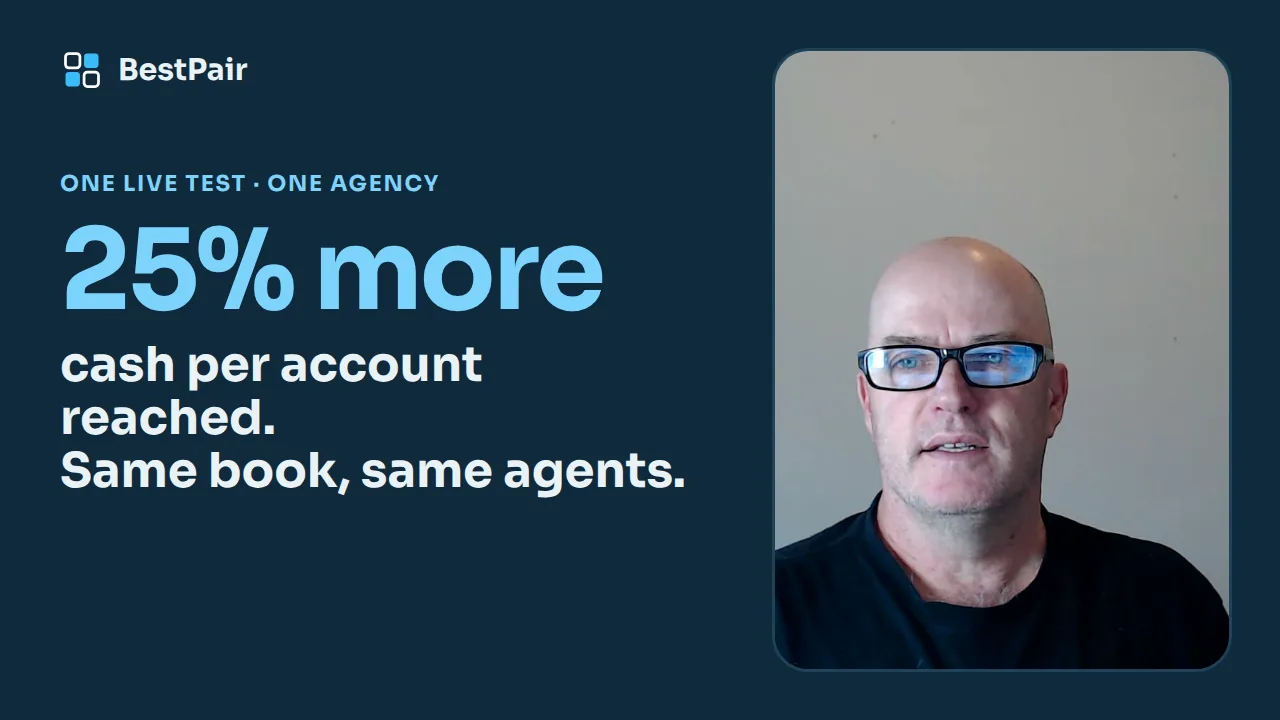
- It does not guarantee a level of lift. Every month is measured against a control group on your own book.
Common follow-up questions
We already work with another pairing vendor. Is there any point talking?
Possibly. If you are already live with someone else, the Floor Assessment still tells you how far apart your collectors are on your own book, which is a useful check on what you have.
Videos on this
See it on the main site
Two minutes
Watch the explainer
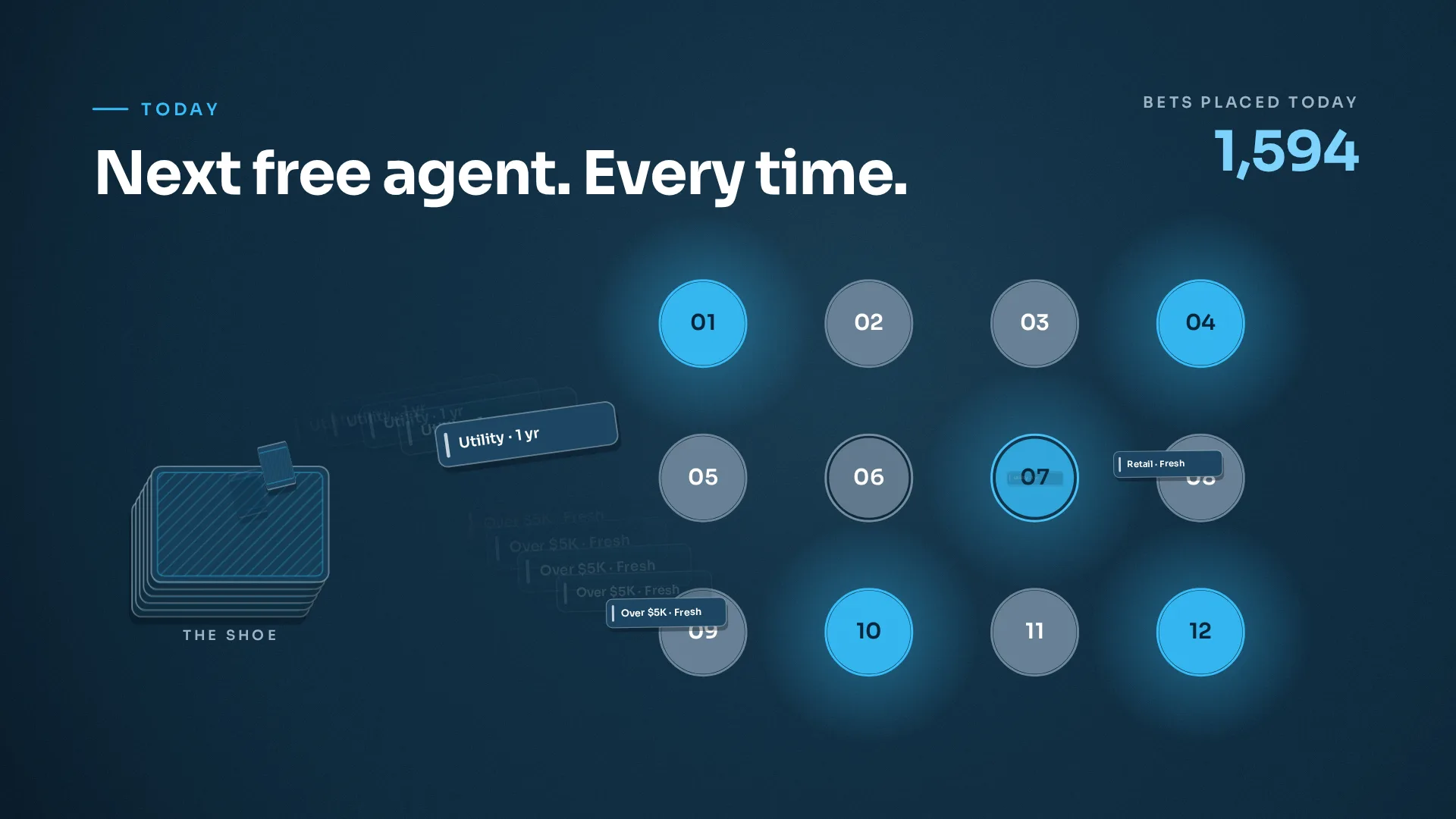
What happens to the next account today, what pairing changes, and what the Floor Assessment measures. With captions.
Watch the videoYour floor
Try the calculator
Three numbers off your dialer and collections reports give an illustrative figure for your floor. It is at best informed guesswork until your own history is measured.
Open the calculatorWhat you get
See the sample report
The report the Floor Assessment delivers, page by page, built on a fictional floor with synthetic data.
See the report
Would it be a bad idea to spend 45 minutes finding out?
If your shop does not qualify, you will hear it on the call, not after you have paid for a report.
Book a 45-minute fit call