Our contact center platform already has predictive routing. Is that the same as predictive pairing?
Related, but not the same. Platform predictive routing, such as Genesys Cloud Predictive Routing, sends each interaction waiting in a queue to the agent most likely to improve a chosen KPI, such as handle time or repeat contacts. Predictive pairing for collections decides, before anyone dials, which collector works each outbound account, learns from payments recorded in the collection system, and is measured every month on dollars collected per account contacted against a control group.
New to BestPair? See what it is and how it works
How do the two compare?
| Platform predictive routing (typical) | Predictive pairing (BestPair) | |
|---|---|---|
| What it decides | Which agent takes an interaction waiting in a queue | Which collector works each outbound account |
| When | As the interaction arrives | Before the day’s dialing |
| What it learns from | What the platform records about each interaction, plus any outside data loaded into it | Call history, plus payments from your collection system |
| Where it runs | Inside the platform | Off-site, with nothing installed; assignments by a daily file or your skills-based router |
| How it is measured | A/B test against existing routing, on the KPI you chose | Every month against a control group, on dollars collected per account contacted |
Both can sit on the same floor. They answer different questions.
Does platform predictive routing work on outbound accounts?
Genesys describes its predictive routing as working in real time, across voice and digital channels, to match customers in queues to the agents most likely to deliver the best customer experiences, and as able to coexist with existing routing logic for simplified A/B testing (Genesys Cloud Predictive Routing overview).
An outbound collection floor makes a different decision: which collector works which account on today’s list, made before anyone dials. The consumer is not waiting in a queue, and the account may be called several times over weeks. That decision can be tested on its own, whatever the platform does on inbound calls.
Does it learn from payments?
A model learns only from the outcomes it is given. Platform routing learns from what the platform records about each interaction. The KPIs Genesys names in its overview are average handle time and first-contact resolution, tracked through next contact avoidance (whether the customer comes back after an interaction), and it also mentions optimizing to several KPIs and bringing in third-party data.
In collections, the outcome that matters is a payment, and payments land days later in your collection system, not your dialer. So the questions to ask your platform team are practical ones:
- Is the model given those payments, by account and collector, every day?
- Is it scored on dollars collected, or on how short the call was and whether the consumer called back?
- Does it decide who works an outbound account, or only who answers the next interaction?
Do we have to change platforms?
No. BestPair works off-site, with nothing installed. It posts one file of assignments a day, or works through your skills-based router, and works with the dialer you have, or a mix of them. BestPair is integrated with TCN and Genesys, and some work has been done with ViciDial.
How is each one measured?
Genesys describes testing its predictive routing A/B against the routing already on the queue, on the KPIs you choose. BestPair is measured every month against a control group on your own book. Accounts are split at random before the first call, the control group stays on your current routing, and the score is dollars collected per account contacted. The fee follows the result. How a routing change is proved.
Which one should you test?
In our view, each should be tested on its own ground. On inbound queues, platform routing can be tried against your current routing on the KPI that matters there. On the outbound collection campaign, the question is who works each account, and the test is dollars collected against a control group.
If your platform’s predictive routing is already live on an outbound collection campaign and measured on dollars collected, say so on the fit call. BestPair would rather find that out early.
Sources
- Genesys Cloud Predictive Routing: Genesys product overview, hosted by Call Centre Helper; what the platform’s predictive routing matches, the KPIs it names and how it is tested.
Common follow-up questions
How can we tell whether our platform’s routing already does this?
Ask three things. Does it decide who works outbound accounts, or only who takes interactions waiting in a queue? Is it given the payments from your collection system, by account and collector, or only call outcomes? Is it measured every month against a control group on dollars collected? If the answer to all three is yes, say so on the fit call.
Can BestPair run alongside Genesys or TCN?
Yes. BestPair is integrated with TCN and Genesys, and assignments arrive by a daily file or through your skills-based router. Which dialers work with agent matching.
Do we need to switch off our platform’s predictive routing?
Not for inbound queues. On the outbound collection campaign under test, the routing being tested should be the one that decides which collector works each account, with the control group left on your current routing. Otherwise neither result means much.
Videos on this
See it on the main site
Two minutes
Watch the explainer
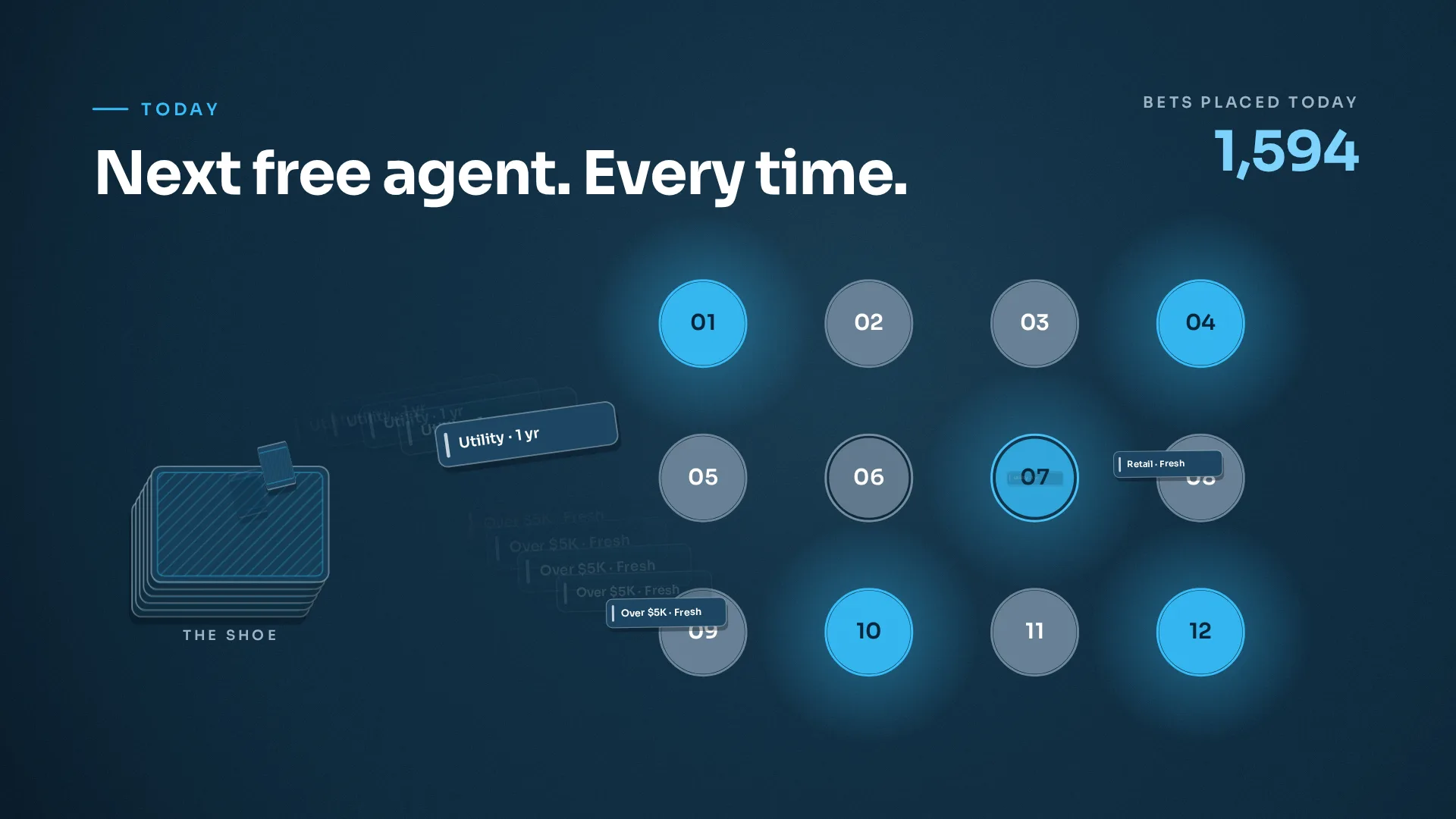
What happens to the next account today, what pairing changes, and what the Floor Assessment measures. With captions.
Watch the videoYour floor
Try the calculator
Three numbers off your dialer and collections reports give an illustrative figure for your floor. It is at best informed guesswork until your own history is measured.
Open the calculatorWhat you get
See the sample report
The report the Floor Assessment delivers, page by page, built on a fictional floor with synthetic data.
See the report
Would it be a bad idea to spend 45 minutes finding out?
If your shop does not qualify, you will hear it on the call, not after you have paid for a report.
Book a 45-minute fit call